
Exploring Black Identity
some thoughts on works of David Hammons and Dawoud Bey...

Black American identity has a historical cutoff. This was and is intentional. To remove the ancestral history of an individual is to attempt to remove identity. Art, to historians that do not study it, may not be at the forefront for documentation of historical record. This is especially true if the art is not photography due to its relationship with objective visual truth. However, there is no media that does not tamper with facts. From the princess filter of the Renaissance to the ability to pay for public relations in the contemporary, the Black image has been at the whim of the white imperial gaze. Implementing the western thought and practice of writing history down as a form of legitimacy creates a problem for the verbal record of the Black American enslaved person. The Works Progress Administration’s Slave Narratives exist through the lens of the white interviewers imposing a racist accent within the transcript. This trickles down to art historical record. During the early twentieth century Black Americans couldn’t afford cameras without privilege or accessibility until they became apart of mass production. Even still, The Harlem Renaissance created a Mecca of photography only to be reduced to the work of James Van Der Zee as most of the photography studios present in Harlem and their work have been lost to time. Black American artists and scholars continue to explore new ways of documenting Black culture and its identity through the lens of a community whose historical relevance continues to be debated.
David Hammons worked to create documentation of how to it feels to exist as a Black American socially though his works Black Boy’s Window (1968) and The Door (1969). These works make apparent the doors that stand between Black people and opportunity. Christina Sharpe, an art historian specializing in Black identity, illustrates the ways Black life and death are wrapped up, produced, and determined by the afterlife of slavery in the search for this opportunity. Hammons’ long time friend and collaborator, Dawoud Bey uses photography to explore the historically violent implications of Black American identity through his works 9.15.63 (2013) and Night Coming Tenderly, Black (2017), photographic series about the path taken by four fourteen-year-old Black girls who lost their lives in the Sixteenth Street Church Bombing and the quiet path taken by runaway slaves in Cleveland, Ohio. Tina Campt explains the use of Bey’s photography to encapsulate not just Black tragedy, but the importance of communal spaces and practices in Black American culture.
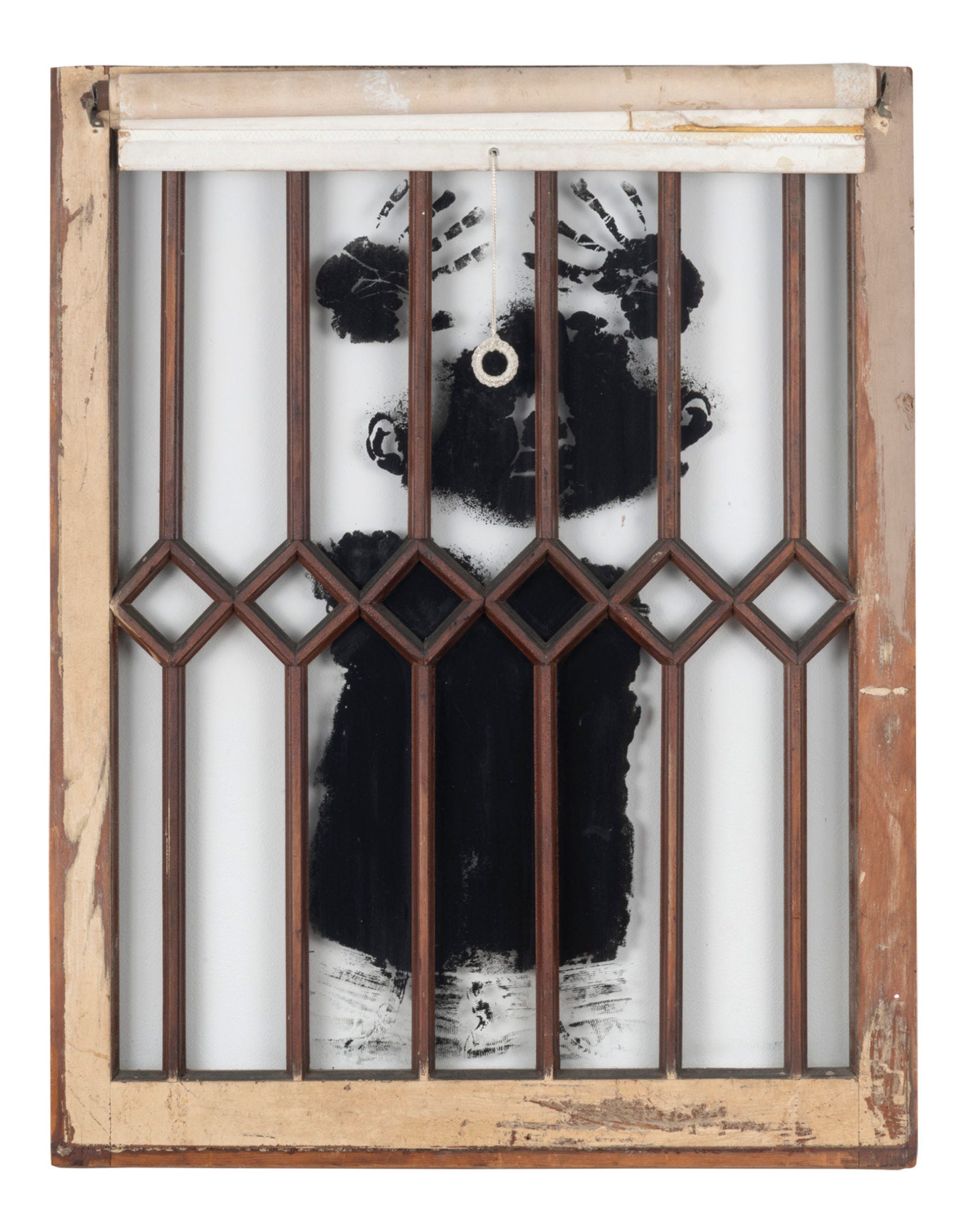
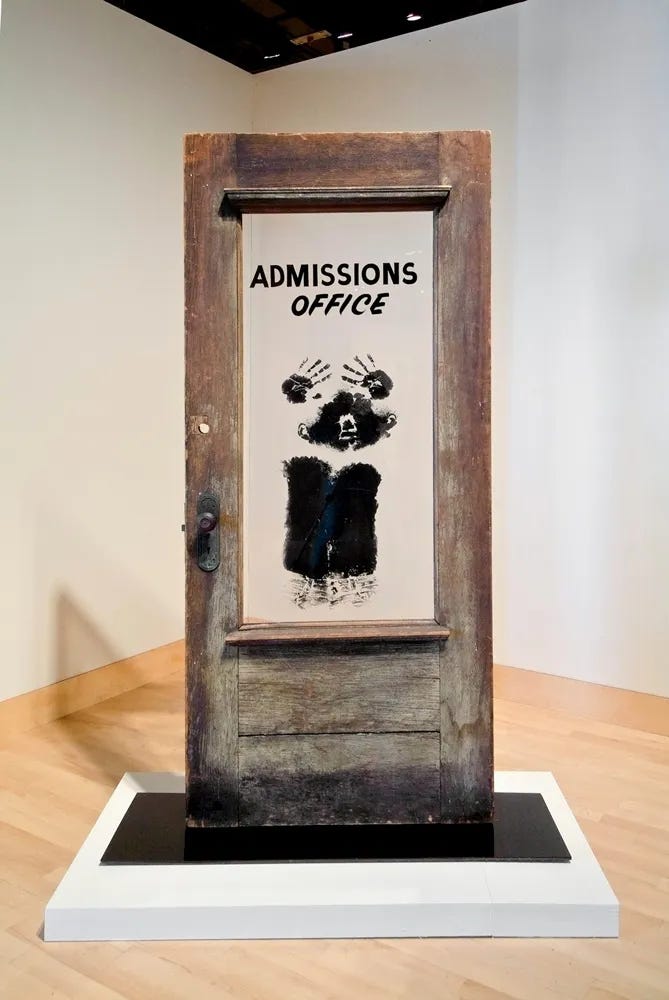
A dark screenprint of a young Black boy is pressed upon a repurposed wooden window. This window is complete with imprisoning grilles and a dirty rolling shade. This same image is used on the window panel of a door with the words: Admissions Office. Both apart of David Hammons’ Body Print Series of the late 1960s, the artist focused on the exclusion of Black Americans in multiple facets. The exclusion from their own ancestors, the exclusion from freedom, and the exclusion from opportunity. Focusing on exclusion from higher education, The Door uses the influence of Yves Klein and other Los Angeles artists to play with anthropometry and create a body print by greasing himself and other subjects before pressing the body to the canvas. Hammons then covers the surface of the canvas in graphite powder to solidify the resulting image. This was a practice that appeared to separate him from his counterparts during this time. According to Hammons, his art was focused on the reclamation of symbols concurrent to the Black identity. These body prints leave an individualized mark allowing personhood to exist for the figure without knowing who the figure is. Oftentimes Black figures in art history are stereotypical, and the characteristics applied and perpetuated through their imagery can paint a picture of insignificance. We almost never know the figures, they remain nameless through time, unimportant, and typically only used in contrast to the white angelic figure they are presented next to. Hammons decides to use this anonymity as means of exploring the effects of systemic rejection on the Black body, while still interrogating the lack of Black recognition in art history.
Christina Sharpe’s parents moved to the suburbs for opportunity. Movement for opportunity is common throughout the Black Diaspora, as with The Great Migration, but never a definitive. It is oftentimes an empty promise. What opportunity means is at the whims of systemic oppression, and not the whims of the Black people searching for it. Racism, exclusion, and circumstance remain the same if not in a more violently silent way in perceived spaces of opportunity. Sharpe refers to her family having a lived experience in the wake of the unfinished project of emancipation. The Trans-Atlantic slave trade is inextricably tied to the Black existence, and as Sharpe poignantly says “the disaster and the writing of a disaster are never present, and yet are always present”. The autobiographical example is integral to representing the image of the Black because it engages in an important and nuanced social and historical process. The exploration of identity generations of Black Americans have experienced shows an incredible amount of self realization. Their ability to establish a definitive culture with nothing to work with while ceremoniously reconciling with violent racism shows immense cultural resilience and meditation.
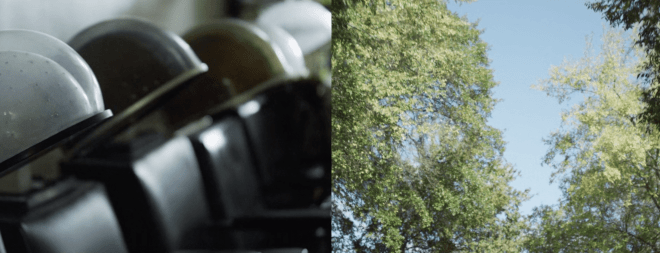
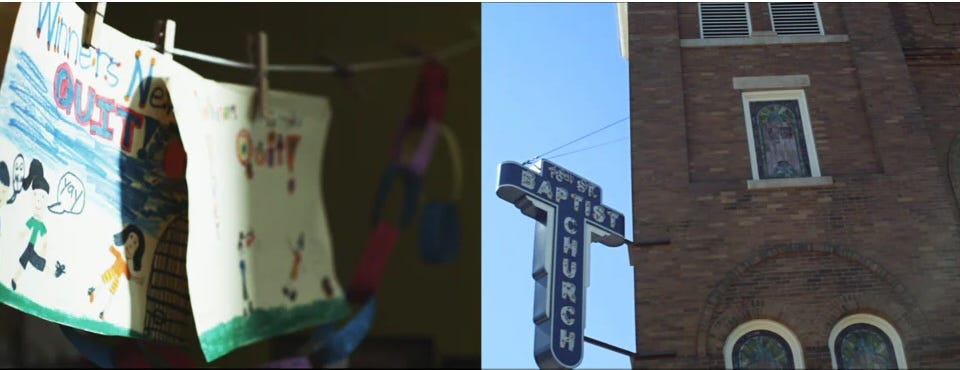
An eleven minute split screen projection: on the left, a beauty shop. On the right, a sonic blue sky covered in green trees facing upward. On the left, hair products for perms. On the right, the tops of triangular house roofs against the blue sky and green trees facing upward. On the left, tools from a barbershop. On the right, again a blue scenic sky with green trees facing upward. On the left, a lunch counter. On the right, more sky and trees. This is where the journey comes to an end. The last scene: on the left, drawings on a close line hanging in a classroom. On the right, a brick building with a sign in the shape of a cross reading, 16th Street Baptist Church again from an upward perspective. This is Dawoud Bey’s imagined pathway three young Alabama girls took every week, and as the title suggests this is the devastating day they would stop taking that journey. On September 15, 1963 their church in Birmingham, Alabama was bombed in a hate crime. Bey simulates this journey with his camera collecting images of their ghost paths from the angle of a child, and allowing the viewer to step into the path of the Black children subjected to the horrors based solely on the color of their skin.
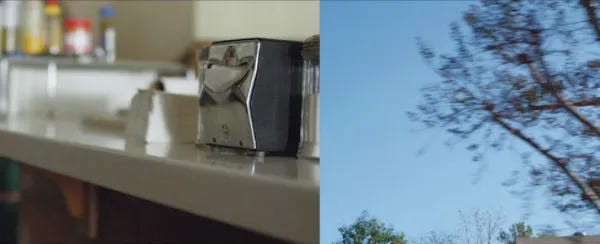
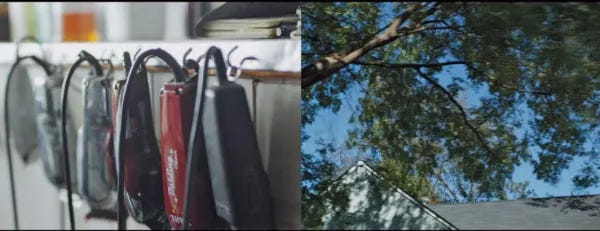
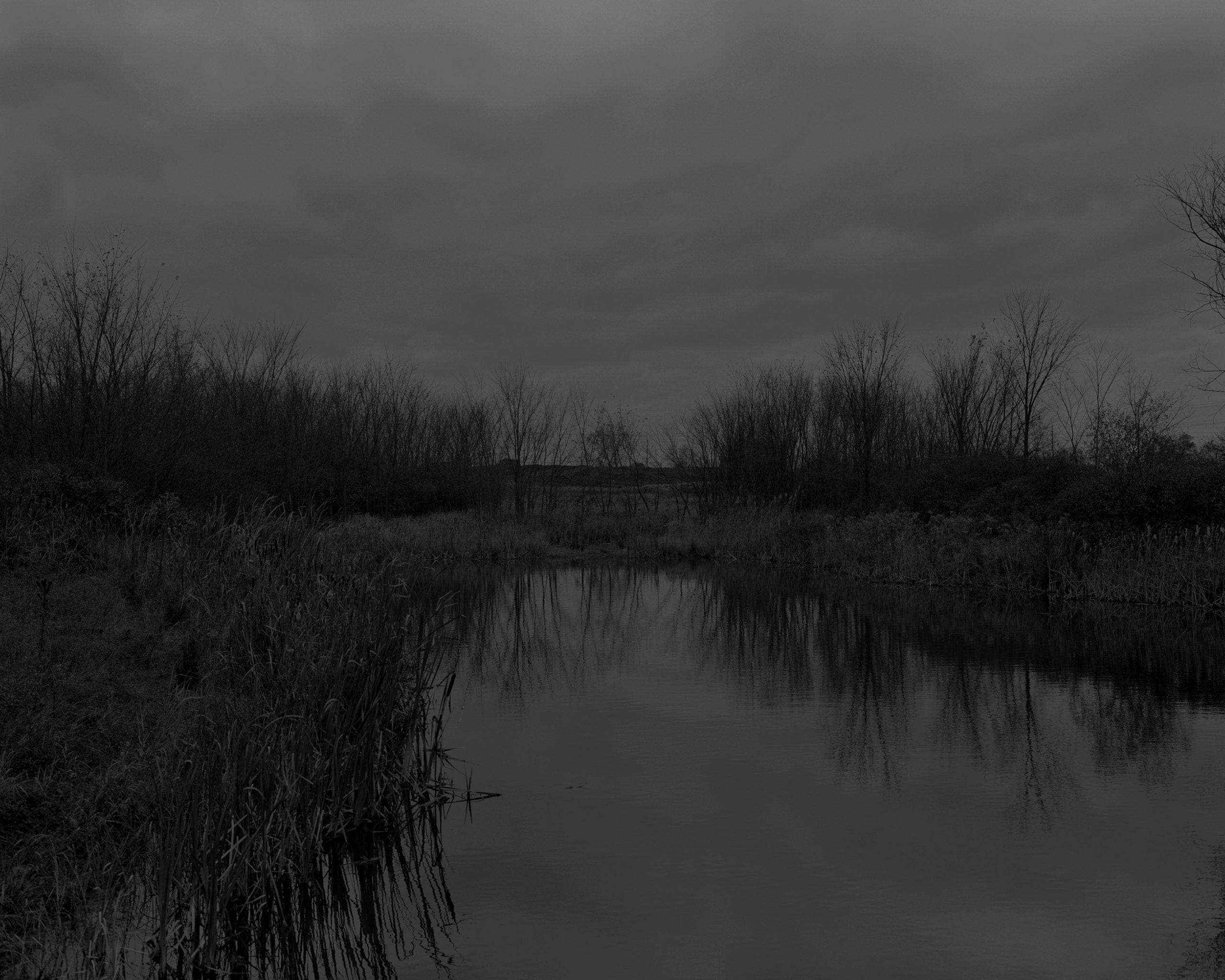
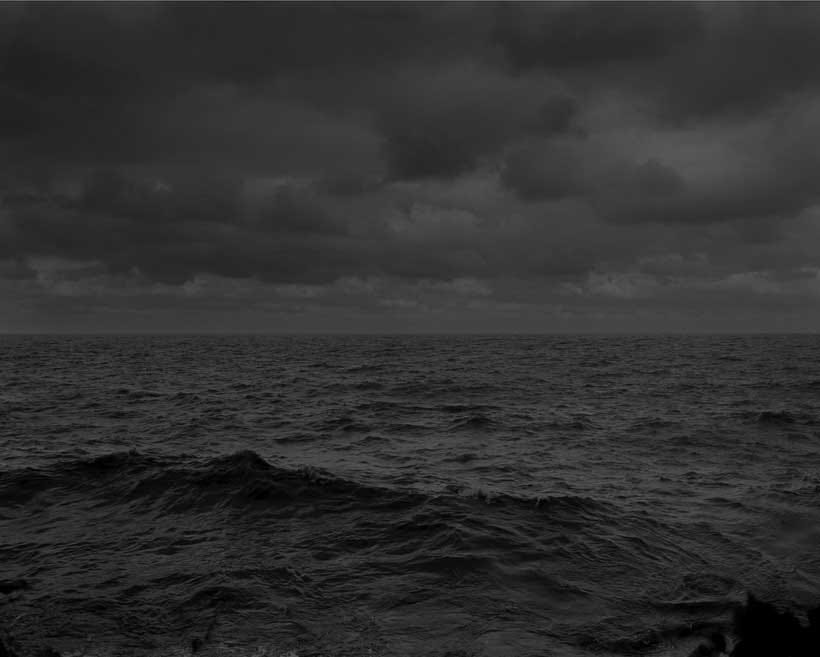
Bey uses this same technique to create a quiet journey though secluded homes, forests, greenery, and ponds in Night Coming Tenderly, Black (2017). Here he imagines another ghost’s pathway: the path of runaway slaves in a pre-urbanized Columbus, Ohio. Bey describes the series as an “enveloping darkness that was a passage to liberation”. Bey is able to aptly convey and converge these complex ancestral emotions with an eerie air around the photos, as if there is an invisible fog being used as a filter to the black and white images. Bey uses film and photo medias to interrogate Black American history, a feat only someone of the Black American experience would be able to create meaningful and understandable meditation on.
Black communal spaces alone are forms of protest, whether they are seen as such or not. The historical documentation of beauty shops and barbershops show the importance of Black representation within the community. In these spaces there is no policing of the Black presence, and it’s importance in the historical record cannot be downplayed or exaggerated. Black representation is ripe for the picking of respectability politics, and these safe spaces are of the few where these politics do not exist. How we present ourselves to the public is often how we are judged, and the racial connotations of that can be deadly. The Birmingham tragedy stands out because of this fact.
Tina Campt asks the viewers to listen. In the Night Coming series, the art historian argues you can hear the silence. The sound can only exist in relation to quiet because silence is not actually real, and here we must truly pay attention because it holds worlds of creativity. You can compare this to whiteness being unable to exist without it’s perceived opposite, blackness. It is likely within the most marginalized community that we will able to see a true path of liberation, and there are worlds to be spoken within the leftover communities ravaged by colonialism. It is in the expression of art and performance that protest can exist in the loudest and most lasting ways. Art does not exist only as aesthetics, and the commonplace of positioning artists of color in generalized categories outside of “fine art” only reinforces non-political art. It’s here that art becomes an important to protest because of these attempts at silencing.
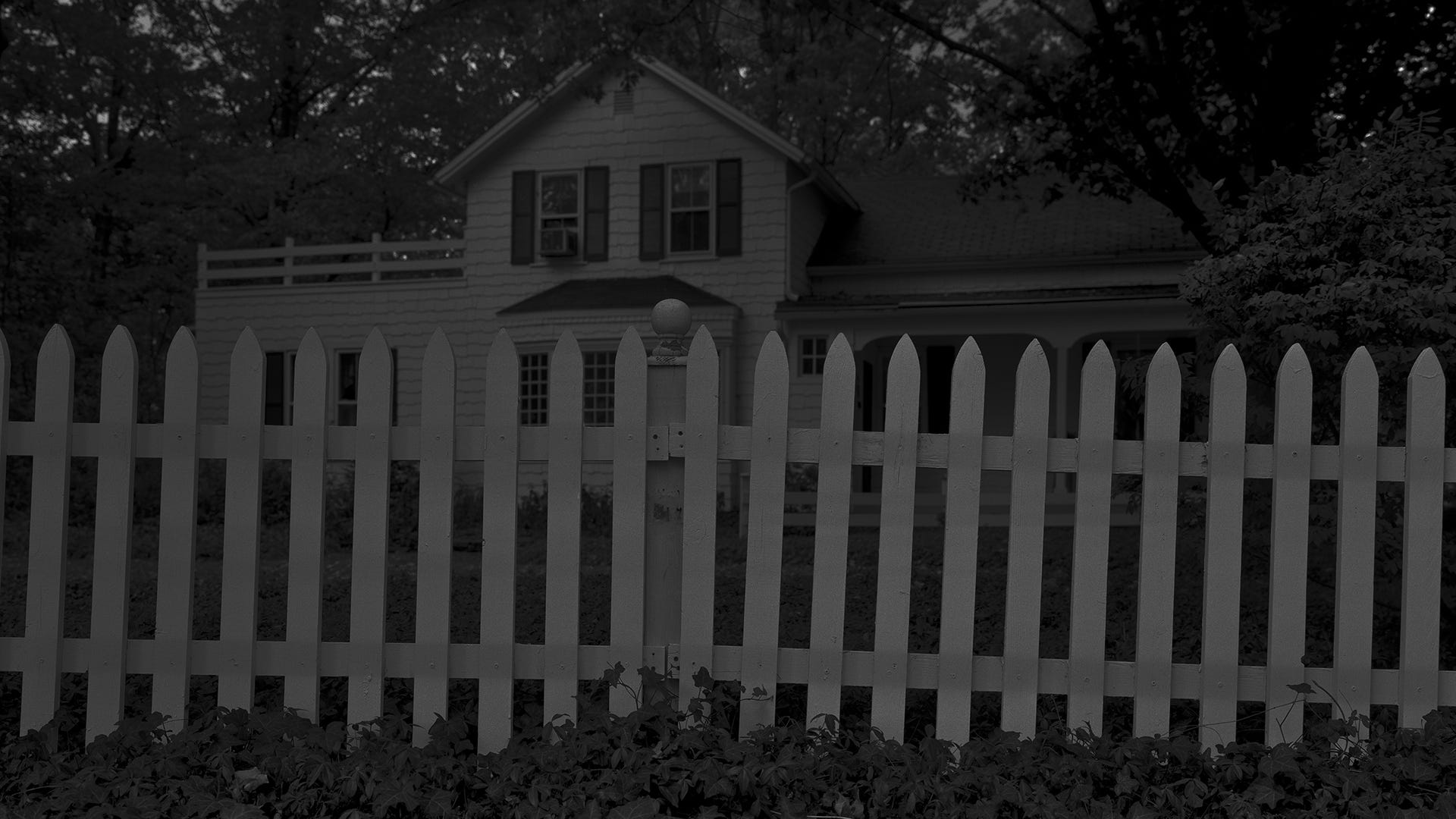
The artists and scholars using autobiographical references to document the Black experience create a pathway for others to follow, and the more self-representation in Black history the less that history can be left to the discourse of racial lenses. Black American contemporary artists today create their own pathways of expression, glaring into void of Black archival record. The African diaspora and its vastness, and of course the travesties of the Trans Atlantic slave trade, creates a logistical problem for pinpointing any ancestral ties. The contemporary documentation of Black lives as they are lived and experienced contributes to the historical recognition of humanity for Black Americans. That a humanity even needs to be established for Black people is another conversation entirely. Hammons’ expression of bodily abstraction, Bey’s expression of generational meditation, Sharpe’s exploration of Black life and death, and Campt’s fixation on the quiet show us multiple interpretations of Black history. Black Americans are taught their history exists though a rather narrow historical image of slavery and the subsequent Black Power Movement many (many, many) years later with little acknowledgement that they have managed to create and cultivate an entire culture. This culture whose influence reverberates throughout world culture. It is through the Black gaze that there will be a way forward into archival permanence.
*originally written in 2023.
bibliography:
Campt, Tina. A Black Gaze: Artists Changing How We See, The MIT Press, 2021. ISBN(electronic): 9780262365666, https://doi.org/10.7551/mitpress/13762.001.0001
Heinrich, Will. David Hammons, Body and Soul, at the Drawing Center: Critic’s Pick. New York: New York Times Company, 2021. https://www.proquest.com/blogs-podcasts-websites/david-hammons-body-soul-at-drawing-center/docview/2504831275/se-2.
Sharpe, Christina. In the Wake: On Blackness and Being, Duke University Press, Durham and London, 2016.